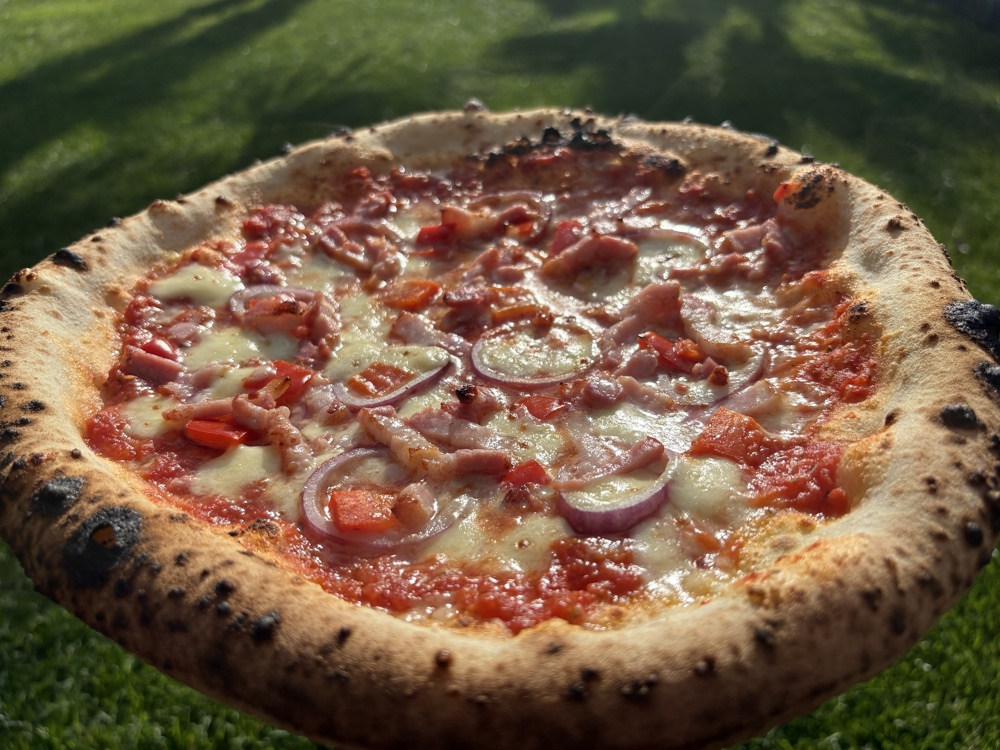
There is a golden rule in the world of pizza: respect the tradition. But if you step into my backyard, there is a rule that completely overrules that: happy wife, happy life.
This weekend, I fired up the Cozze (17″ Premium Rotate) gas oven for a massive pizza session. While the dough protocol was strictly traditional and high-end Neapolitan, the toppings took a turn that would make a traditional Italian pizzaiolo shed a tear. From classic salami to a killer bacon-and-onion creation, and yes… even a Pizza Hawaii for the wife. Because in my backyard, the customer is king!
Let’s dive into the dough specs, the process, and how these non-traditional bangers turned out.
The Secret: The 30-Hour Caputo Cuoco Protocol
A great pizza always starts with the crust. For this session, I used Caputo Tipo 00 Cuoco (Saccarosso) flour. This high-protein flour is specifically engineered for long fermentation periods, giving the dough the strength it needs to hold massive air pockets without tearing during the stretch.
To make 6 perfect pizza balls of around 260 grams each, I used the following formula:
- Flour: 1kg Caputo Cuoco, Typo 00
- Water (62% Hydration): 620g (ice-cold)
- Salt (3.3%): 33g
- Yeast: Just a gram of instant dry yeast (or fresh yeast scaled to temperature)
The Fermentation Timeline:
- The Mix & Bulk Fermentation: Knead the dough until it’s perfectly smooth and has developed a strong gluten network. Let the bulk dough rest at room temperature for 6 hours to wake up the yeast and kickstart the flavor development.
- The Staglio (Balling): Divide the dough into 6 equal portions of roughly 260 grams and ball them up tightly.
- The Cold Fermentation: Place the dough balls into an airtight dough box and transfer them to the fridge for 24 hours. This cold fermentation slows down the yeast but allows the enzymes to break down starches into complex sugars, creating that depth of flavor and beautiful charring (leopard spotting) in the oven.
- The Warm-up: Bring the dough box out of the fridge about 4 hours before baking so the gluten can relax and the dough reaches room temperature.
The Foundation: True San Marzano D.O.P. Sauce
Even if the toppings are wild, you cannot compromise on the sauce. I used genuine San Marzano D.O.P. peeled tomatoes.
Don’t use a blender! I hand-crushed the tomatoes to keep a beautiful, rustic texture. I simmered them gently with just a pinch of salt and a bit of dried oregano, then let the sauce cool down completely before putting it on the pizza. This concentrates the natural sweetness and acidity of the tomatoes perfectly.
The Lineup: Three Wildly Different Toppings
Once the bolls were stretched effortlessly in Caputo Semola Rimacinata, it was time to build.
1. The Smoked Bacon, Red Onion & Bell Pepper Bangers
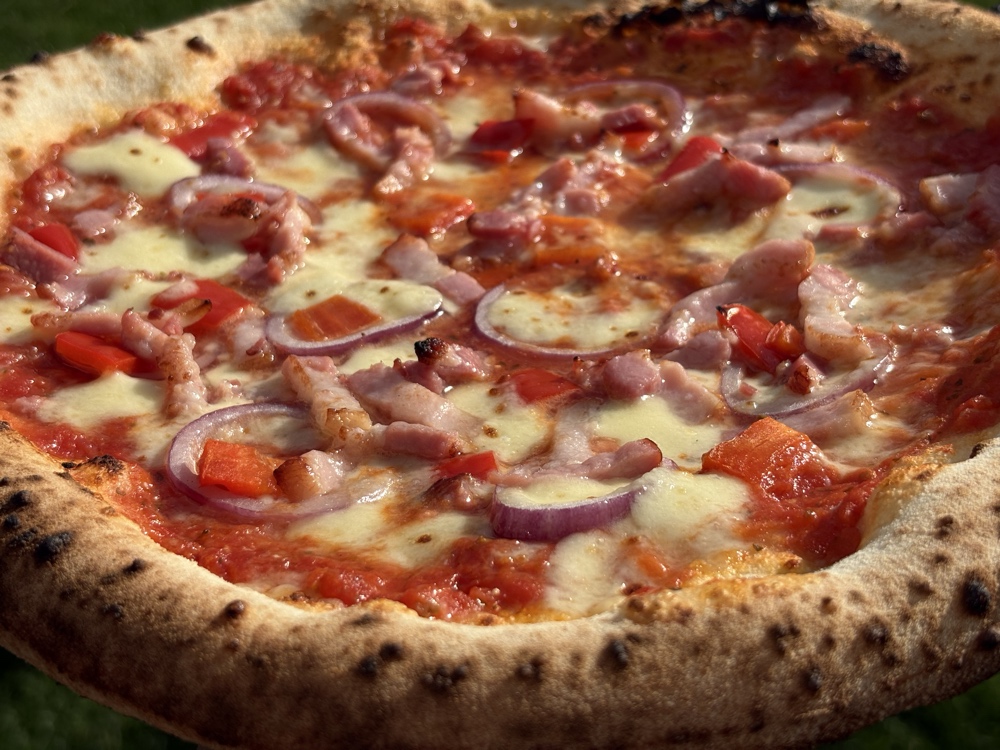
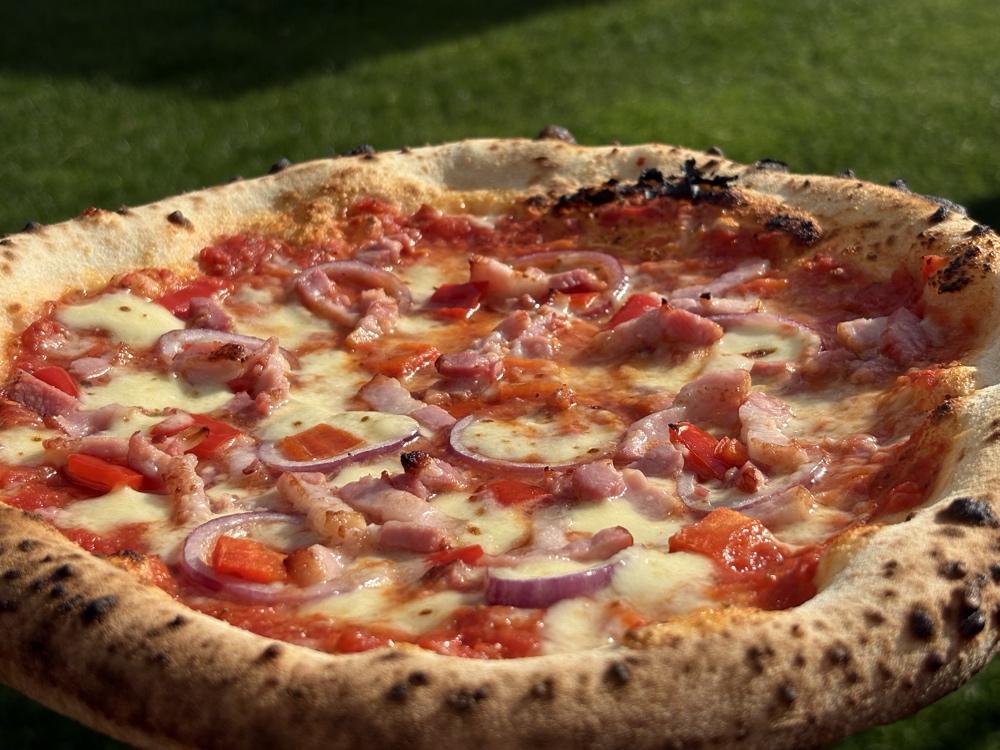
This was an absolute masterpiece in the Cozze Rotante. Over a base of the San Marzano sauce and fresh mozzarella, I scattered raw, high-quality smoked bacon cubes (spekblokjes), crisp slices of red onion, and red bell pepper.
- The Bake: Because the Cozze Rotante hits temperatures over 450°C, the bacon fat renders directly into the cheese, while the red onions and peppers soften and slightly caramelize in the flames without burning. It’s smoky, sweet, savory, and incredibly satisfying.
2. The Infamous Pizza Hawaii (The Wife’s Choice)
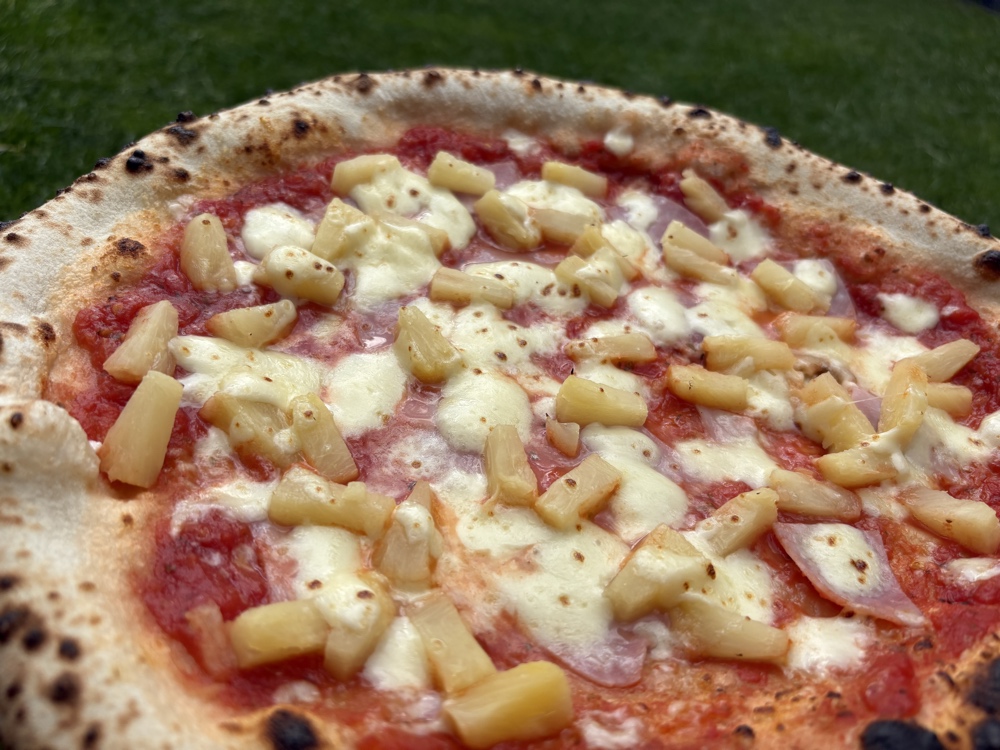
Yes, we did it. San Marzano sauce, mozzarella, savory ham, and… juicy pineapple chunks.
- The Pro-Tip: To prevent a soggy bottom from the pineapple juice, make sure to dry-dep the pineapple chunks thoroughly before putting them on the pizza. In the high heat of the oven, the natural sugars in the pineapple caramelized beautifully against the salty ham. She loved it, so mission accomplished!
3. The Classic Salami
A timeless crowd-pleaser. Hot grease cup pepperoni/salami curling up under the intense heat of the gas flames. Simple, effective, and always gone in seconds.
The Result: Pure Alveoli Perfection
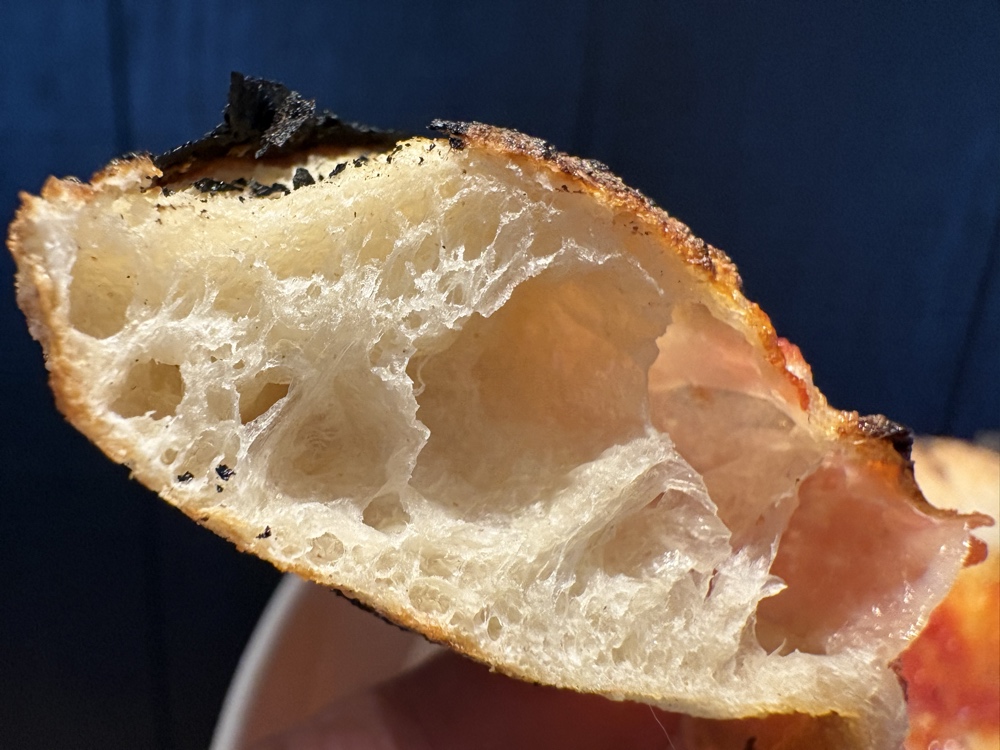
When a pizza cooks in less than 90 seconds on a rotating stone, the oven spring is violent. If you check out the cross-section photo (the crumb shot), you can see the massive alveoli (air pockets) inside the cornicione. The crust was light as a cloud, crispy on the outside, and soft on the inside.
Using Caputo Semola as the launching pad meant the pizzas slid off the peel effortlessly, leaving a perfectly golden, blistered undercarriage with zero bitter, burnt flour tastes.
Let’s settle the debate: What is your ultimate ‘guilty pleasure’ pizza topping that would make an Italian chef cry? Drop your wildest combinations in the comments below! 👇🔥
Leave a Reply